

In a broad sense, it refers to the chemical synthesis of rubber to distinguish it from natural rubber produced from rubber trees.
Synthetic high elastic polymers, also known as synthetic elastomers. The yield is only lower than synthetic resin (or plastic) and synthetic fiber. Its performance varies from monomer to monomer, and the performance of a few varieties is similar to that of natural rubber.
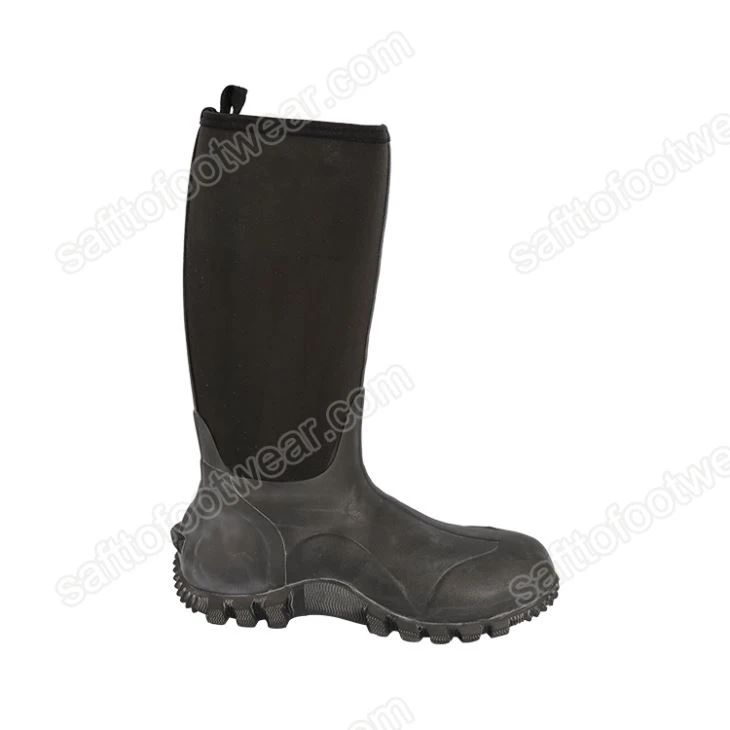
Rubber is a must for rain boots, safety boots, military boots and special industrial boots. Rubber can be classified into natural rubber and synthetic rubber depending on the source. A few varieties of synthetic rubber have similar properties to natural rubber, most of which are different from natural rubber, but both are highly elastic polymer materials, which generally require vulcanization and processing before they have practicality and use value. Synthetic rubber began production in the early 20th century and has grown rapidly since the 1940s. Synthetic rubber is generally not as comprehensive as natural rubber, but it has high elasticity, insulation, air tightness, oil resistance, high temperature resistance or low temperature. It is widely used in industry, agriculture, national defense, transportation and daily life.
Many countries have their own system nomenclature. Nowadays, the more common nomenclature in the world is formulated according to the International Organization for Standardization. This method is the first capital letter of the English name or keyword of the corresponding monomer. The suffix is the first letter R of the English name of "rubber". name. For example, styrene-butadiene rubber is a synthetic rubber obtained by copolymerization of styrene and butadiene, so it is called SBR. Similarly, nitrile rubber is called NBR, and neoprene is called CR. Chinese nomenclature: For copolymers, the corresponding monomers are conjugated with a copolymer rubber such as butadiene-styrene copolymer rubber, referred to as styrene-butadiene rubber; for homopolymers, the first monomer is preceded by a "poly" "Word, and the polymer is suffixed with "rubber" such as cis-1,4-polyisoprene rubber (referred to as isoprene rubber) cis-1,4-polybutadiene rubber (referred to as butadiene rubber) In addition, there is a popular name method, that is, the polymer is named after a specific element or group other than hydrocarbon. For example, a rubber formed from αω-dichlorohydrocarbon (or α,ω-dichloroether) and sodium polysulfide is commonly known as polysulfide rubber, and a rubber obtained by copolymerization of isobutylene and a small amount of isoprene is commonly known as butyl rubber. .