

Hey there! As a supplier of kids rubber boots, I've been thinking a lot about the environmental impacts of these cute and practical shoes. You know, kids rubber boots are super popular. They're great for rainy days, muddy puddles, and all sorts of outdoor adventures. But like any product, they come with their own set of environmental pros and cons.

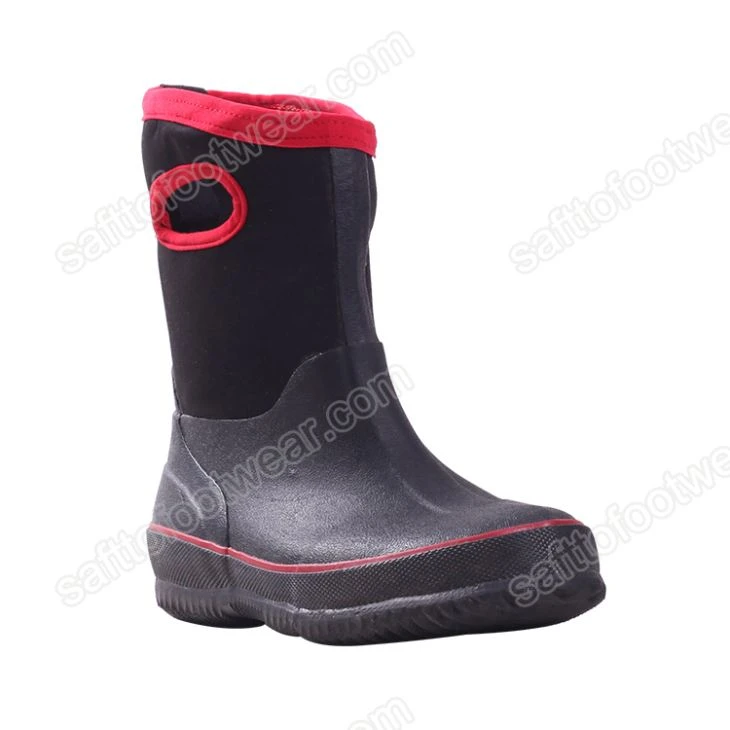
Let's start with the materials. Most kids rubber boots are made from either natural rubber or synthetic rubber. Natural rubber is derived from the sap of rubber trees. On the plus side, rubber trees are a renewable resource. They absorb carbon dioxide from the atmosphere as they grow, which is good for the environment. This means that boots made from natural rubber have a relatively low carbon footprint during the growth phase of the rubber trees. However, the process of harvesting and processing natural rubber can have some negative impacts.
The harvesting of rubber often involves the use of chemicals to stimulate the flow of sap from the trees. These chemicals can potentially contaminate soil and water sources if not managed properly. Also, the processing of natural rubber into boots requires energy, usually in the form of electricity or fossil fuels. This energy consumption contributes to greenhouse gas emissions, which is a major concern for our planet.
On the other hand, synthetic rubber is made from petrochemicals. Petrochemicals are derived from crude oil, a non - renewable resource. The extraction and refining of crude oil are extremely energy - intensive processes that release large amounts of greenhouse gases into the atmosphere. Once the synthetic rubber is produced, it is more resistant to degradation compared to natural rubber. This means that synthetic rubber boots will take a much longer time to break down in landfills, contributing to the growing problem of waste accumulation.
Another aspect to consider is the manufacturing process. The production of kids rubber boots involves several steps, such as molding, vulcanization, and assembly. Each of these steps requires energy and often uses various chemicals. For example, vulcanization is a process that makes the rubber stronger and more durable by adding sulfur and other chemicals. These chemicals can be harmful to the environment if they are not disposed of correctly.
Moreover, the manufacturing facilities themselves can have a significant environmental impact. Factories need to be powered, and if they rely on non - renewable energy sources like coal or natural gas, it will increase the carbon footprint of the boots. The waste generated during the manufacturing process, such as excess rubber, packaging materials, and used chemicals, also needs to be managed properly to prevent environmental pollution.
When it comes to transportation, kids rubber boots are often shipped from the manufacturing countries to different parts of the world. This transportation, whether by sea, air, or land, consumes a lot of fuel and releases pollutants into the atmosphere. Air freight, in particular, has a very high carbon footprint compared to other modes of transportation.
Now, let's talk about the end - of - life of kids rubber boots. Once the boots are no longer usable, they usually end up in landfills. As I mentioned earlier, synthetic rubber boots can take hundreds of years to decompose, while natural rubber boots will break down more quickly but still contribute to landfill waste. In some cases, boots may be incinerated, which can release toxic chemicals into the air if not done in a properly regulated incinerator.
But hey, it's not all bad news! There are some positive environmental aspects to kids rubber boots as well. For instance, rubber boots are very durable. They can last for a long time, especially if they are well - made and well - cared for. This means that kids don't need to replace their boots as often as they might with other types of shoes. Fewer replacements result in less waste being generated over time.
Also, many of the kids rubber boots we offer at our supply, like the Kids Waterproof Rubber Neoprene Outdoor Boots, Neoprene Kids Rubber Rain Boots, and Fashionable Rubber Waterproof Boots for Kids, are designed to be multi - functional. They can be used in different weather conditions and for various outdoor activities. This versatility means that kids don't need to have multiple pairs of shoes for different purposes, which again reduces the overall demand for footwear and the associated environmental impact.
So, what can we do to reduce the environmental impact of kids rubber boots? As a supplier, we're constantly looking for ways to make our products more eco - friendly. We're exploring the use of more sustainable materials, such as recycled rubber, in our boot production. Recycled rubber not only reduces the demand for new rubber but also helps to divert waste from landfills.
We're also working on improving our manufacturing processes to make them more energy - efficient. This includes using renewable energy sources in our factories and reducing the use of harmful chemicals. Additionally, we're looking into more sustainable packaging options, like using biodegradable or recyclable materials.
For consumers, you can help too! When you're buying kids rubber boots, look for products that are made from sustainable materials or have a good environmental track record. Take good care of the boots so that they last longer. And when the boots are no longer usable, try to recycle them if possible. Some recycling facilities can process rubber boots and turn them into new products.
If you're interested in sourcing high - quality kids rubber boots that we're constantly striving to make more environmentally friendly, we'd love to have a chat with you. Whether you're a retailer looking to stock our products or an organization in need of kids rubber boots for an event, we're here to provide you with the best options. Let's start a conversation about how we can work together to meet your needs while also being kind to our planet.
References:
- Environmental Science textbooks on material sourcing and manufacturing impacts
- Industry reports on the rubber and footwear manufacturing sectors