

Hunting boots are essential gear for any hunting enthusiast. They need to be durable, waterproof, and comfortable enough to withstand long hours in the field. But have you ever wondered what materials these boots are usually made of? As a hunting boots supplier, I've got the inside scoop on the most common materials used in the manufacturing of these essential pieces of equipment.
Leather
Leather is one of the most traditional and popular materials for hunting boots. It's known for its durability, breathability, and natural look. Full-grain leather, in particular, is highly sought after because it's the top layer of the hide and retains the natural grain and markings. This type of leather is very strong and can withstand a lot of wear and tear.

One of the big advantages of leather boots is their ability to mold to the shape of your foot over time. This means that as you wear them more, they'll become more comfortable and fit like a glove. However, leather does require some maintenance. You need to clean and condition it regularly to keep it in good shape and prevent it from drying out and cracking.
Many high - end hunting boots use leather for the upper part of the boot. For example, some classic hunting boot styles have leather uppers that provide a tough and stylish exterior. If you're looking for a pair of boots that will last you for years and give you a traditional hunting look, leather boots are a great choice.
Rubber
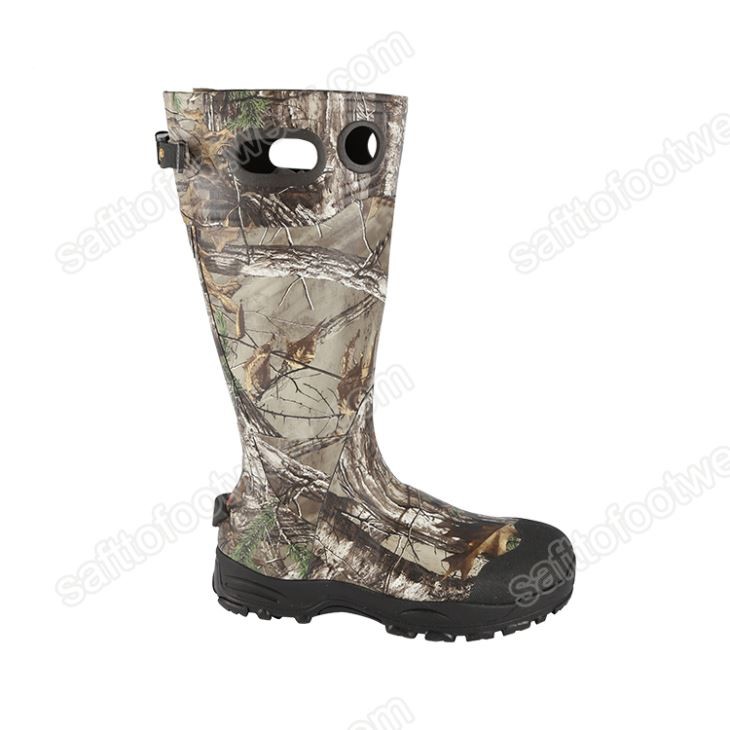
Rubber is another extremely common material in hunting boots, especially for waterproofing. Rubber boots are great for wet and muddy conditions, as they provide an almost impenetrable barrier against water.
There are different types of rubber used in boot manufacturing. Natural rubber is derived from the sap of rubber trees. It's flexible, waterproof, and has good traction. Synthetic rubber, on the other hand, is man - made and can be engineered to have specific properties. For example, some synthetic rubbers are more resistant to chemicals and abrasion.
We offer a variety of rubber hunting boots, such as Jungle Rubber Hunting Boots. These boots are designed for the tough conditions of the jungle, where you'll encounter lots of water, mud, and uneven terrain. The rubber construction ensures that your feet stay dry and protected.
Another popular option is Four Seasons Insulated Rubber Hunting Boots. These boots are great for year - round use. They have insulation to keep your feet warm in the winter and are still waterproof for wet conditions in other seasons.
Nylon
Nylon is a lightweight and durable synthetic material that's often used in combination with other materials in hunting boots. It's known for its strength - to - weight ratio, which means it can be very strong without adding a lot of extra weight to the boot.
Nylon is also resistant to abrasion and tearing, making it a good choice for the parts of the boot that are likely to come into contact with rough surfaces. Many hunting boots use nylon in the lining or as part of the upper construction.
One of the benefits of nylon is its quick - drying properties. If your boots get wet, nylon will dry faster than some other materials, which is great if you're in a hurry to get back out in the field. It's also relatively easy to clean, as you can just wipe it down or throw it in the washing machine in some cases.
Gore - Tex and Other Membranes
Gore - Tex is a well - known waterproof and breathable membrane that's often used in hunting boots. It consists of a thin layer of material that has billions of tiny pores. These pores are small enough to keep water droplets out but large enough to allow water vapor (sweat) to escape.
When a boot is lined with Gore - Tex, it means that your feet will stay dry from the outside elements while also being able to breathe. This helps prevent blisters and keeps your feet comfortable during long hunts.
There are also other similar membranes on the market that offer similar waterproof and breathable properties. These membranes are usually combined with other materials like leather or nylon to create a high - performance hunting boot.
Insulation Materials
Insulation is crucial for hunting boots, especially if you're hunting in cold weather. There are several types of insulation materials used.
Thinsulate is a popular synthetic insulation. It's lightweight, compressible, and provides excellent warmth even when wet. This makes it a great choice for hunting in wet and cold conditions.
Down is another traditional insulation material. It's extremely warm and lightweight. However, it loses its insulating properties when it gets wet, so it's usually used in combination with a waterproof outer layer.
Some boots also use fleece or other types of synthetic fibers for insulation. These materials are soft, warm, and can be easily washed.
Choosing the Right Material for Your Needs
When choosing hunting boots, you need to consider the type of hunting you'll be doing. If you're hunting in a wet, marshy area, rubber boots are probably your best bet. They'll keep your feet dry and provide good traction on slippery surfaces.
If you're hunting in a more wooded area with variable terrain and temperatures, a leather boot with a Gore - Tex lining might be a better choice. It will offer durability, breathability, and waterproofing.
For women hunters, we have Womens Knee High Hunting Boots. These boots are designed with the female foot in mind and come in a variety of materials to suit different hunting conditions.
As a hunting boots supplier, I know that finding the right pair of boots is crucial for a successful hunt. We offer a wide range of hunting boots made from different materials to meet the diverse needs of hunters. Whether you're a beginner or a seasoned pro, we've got the boots for you.
If you're interested in purchasing our hunting boots or have any questions about the materials, feel free to reach out. We're here to help you find the perfect pair of boots for your next hunting adventure. Let's start a conversation about your specific requirements and see how we can assist you in getting the best hunting boots for your needs.
References
- "Footwear Materials and Their Properties" - A textbook on footwear technology
- Industry reports on hunting gear manufacturing and materials trends