

As a supplier of Womens Knee High Hunting Boots, understanding the resistance to chemicals of these boots is crucial. Chemical resistance in hunting boots is not just a technical specification; it's a vital factor that ensures the safety and durability of the boots in various hunting environments.
Importance of Chemical Resistance in Hunting Boots
Hunting often takes place in diverse natural settings, where boots are exposed to a wide range of chemicals. These can include pesticides used in agricultural areas, various solvents, and even the natural chemicals present in plants and animals. For female hunters, knee - high hunting boots are a popular choice as they offer protection up to the knee, guarding against scratches, bites, and exposure to harmful substances.
When boots come into contact with chemicals, there are several potential risks. Chemicals can degrade the materials of the boots, causing them to lose their structural integrity. This can lead to leaks, reduced support, and ultimately, a shorter lifespan for the boots. Moreover, if the chemicals penetrate the boots, they can come into direct contact with the skin, potentially causing irritation, allergic reactions, or more serious health problems.
Factors Affecting Chemical Resistance
The chemical resistance of womens knee - high hunting boots depends on several key factors.
Material Composition
The materials used in the construction of the boots play a significant role in determining their chemical resistance. Common materials for hunting boots include leather, rubber, and synthetic fabrics.
- Leather: Leather is a traditional material for hunting boots. It offers good durability and breathability. However, its chemical resistance can vary depending on the type of leather and the tanning process. Full - grain leather, which is the highest quality, generally has better resistance compared to split - grain leather. But leather can be vulnerable to certain chemicals, such as strong acids and alkalis. For example, sulfuric acid can quickly damage the leather fibers, causing them to break down and lose their strength.
- Rubber: Rubber is known for its excellent chemical resistance, especially against water - based chemicals and many solvents. Rubber boots can withstand exposure to common pesticides and herbicides used in agricultural areas. For instance, they can resist the effects of glyphosate, a widely used herbicide. The Adult Antiskid Rubber Sole Hunting Boots are a great example of boots that benefit from the chemical - resistant properties of rubber. The rubber sole not only provides good traction but also acts as a barrier against chemicals on the ground.
- Synthetic Fabrics: Synthetic fabrics, such as nylon and polyester, are often used in combination with other materials to enhance the performance of hunting boots. They can offer good chemical resistance, especially against oils and greases. Some synthetic fabrics are also treated with special coatings to improve their resistance to a wider range of chemicals.
Manufacturing Processes
The way the boots are manufactured can also affect their chemical resistance. For example, the bonding process between different layers of materials is important. If the bonding is weak, chemicals can seep between the layers, reducing the overall protection of the boots. Additionally, the finishing treatments applied to the boots can enhance their chemical resistance. Some manufacturers apply a waterproof and chemical - resistant coating to the surface of the boots, which can act as an extra layer of protection.
Design Features
The design of the boots can influence their chemical resistance. Knee - high boots provide more coverage compared to ankle - high boots, reducing the area of the leg that is exposed to chemicals. A well - designed boot should also have a tight seal around the ankle to prevent chemicals from entering the boot. Some boots have additional features, such as reinforced toe and heel areas, which can provide extra protection against chemical spills and abrasions.
Testing Chemical Resistance
To ensure the quality and chemical resistance of womens knee - high hunting boots, manufacturers conduct various tests.
Immersion Tests
In immersion tests, samples of the boot materials are immersed in different chemicals for a specified period. The samples are then examined for any signs of degradation, such as changes in color, texture, or strength. For example, a sample of rubber may be immersed in a solution of a common pesticide for 24 hours. After the immersion, the sample is tested for its hardness, tensile strength, and elongation. If the properties of the sample change significantly, it indicates that the rubber may not be suitable for use in an environment where exposure to that pesticide is likely.
Spray Tests
Spray tests are used to simulate real - world scenarios where chemicals are sprayed onto the boots. A fine mist of the chemical is sprayed onto the boot surface, and the boot is observed for any signs of penetration or damage. This test can help manufacturers determine how well the boots can withstand chemical sprays in a hunting situation, such as when walking through a field that has recently been treated with pesticides.
Comparing Different Boot Models
When it comes to comparing the chemical resistance of different models of womens knee - high hunting boots, it's important to look at the product specifications provided by the manufacturers. Some boots may be specifically designed for high - chemical - exposure environments, while others may be more suitable for general hunting use.
The Mens Hunting Rubber Rain Boots can also provide some insights into the chemical - resistant capabilities of rubber boots. Although they are designed for men, the rubber technology used in these boots can be similar to that in womens boots. Rubber boots are generally more resistant to chemicals compared to leather boots, especially in wet and chemical - rich environments.
The Snake Proof Rubber Hunting Boots are another example. These boots are not only designed to protect against snake bites but also offer good chemical resistance. The thick rubber construction provides a strong barrier against chemicals on the ground, making them suitable for hunting in areas where chemical exposure is a concern.

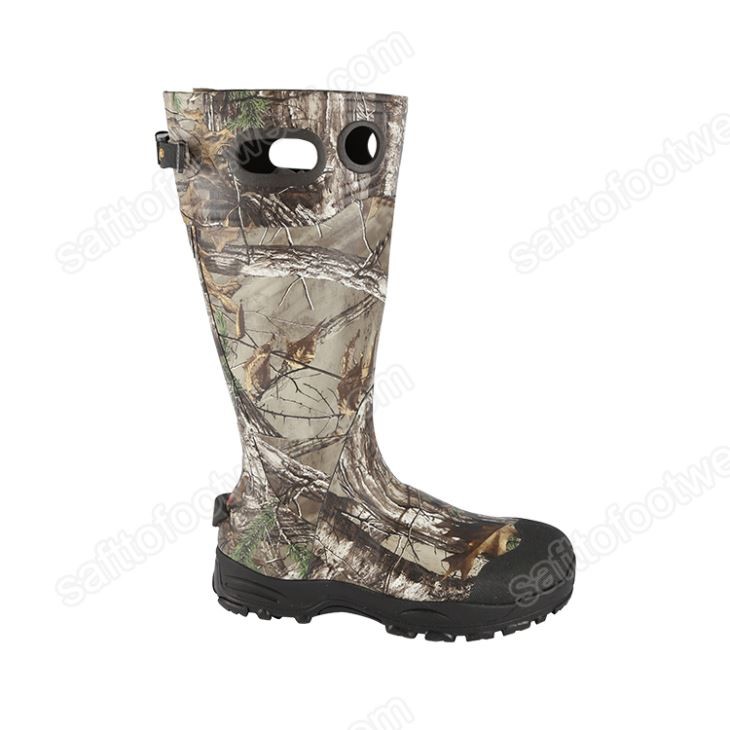
Maintaining Chemical Resistance
Proper maintenance of womens knee - high hunting boots is essential to preserve their chemical resistance.
- Cleaning: After each use, the boots should be cleaned thoroughly to remove any chemical residues. Use a mild detergent and water to clean the boots. Avoid using harsh chemicals or abrasive cleaners, as these can damage the boot materials and reduce their chemical resistance.
- Storage: Store the boots in a cool, dry place away from direct sunlight and chemicals. Exposure to high temperatures and sunlight can cause the materials to degrade over time, reducing their chemical resistance.
Conclusion
The chemical resistance of womens knee - high hunting boots is a critical aspect that should not be overlooked. By understanding the factors that affect chemical resistance, such as material composition, manufacturing processes, and design features, female hunters can make informed decisions when choosing the right boots for their needs.
As a supplier of womens knee - high hunting boots, we are committed to providing high - quality products that offer excellent chemical resistance. Our boots are carefully tested to ensure they can withstand the rigors of the hunting environment. If you are interested in purchasing our womens knee - high hunting boots or have any questions about their chemical resistance, please feel free to contact us for further discussion and procurement.
References
- ASTM International. (20XX). Standard Test Methods for Evaluating the Resistance of Protective Clothing Materials to Permeation by Liquids and Gases.
- Smith, J. (20XX). Chemical Resistance of Materials in Outdoor Equipment. Journal of Outdoor Gear Science, 10(2), 45 - 56.
- Wilson, A. (20XX). The Impact of Chemical Exposure on Hunting Boot Durability. Hunting Equipment Review, 15(3), 78 - 85.