

Hey there, fellow hunters and outdoor enthusiasts! I'm a supplier of Wetland Rubber Hunting Boots, and today, I wanna chat about how these boots hold up in freezing temperatures.

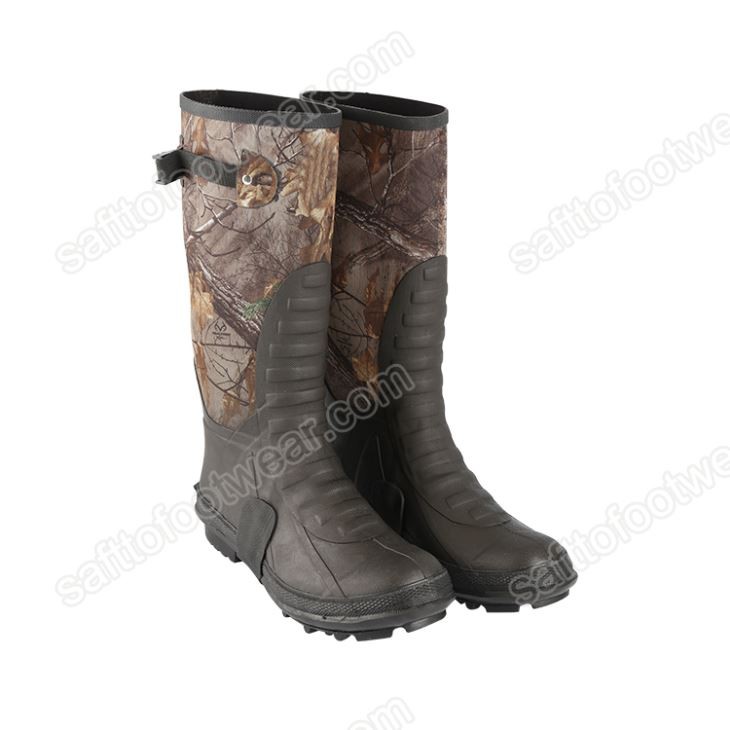
First off, let's talk about what makes wetland rubber hunting boots so special. They're designed to keep your feet dry and comfortable in wet, muddy conditions, which is a must when you're out in the wild. But how do they fare when the mercury drops?
Well, the rubber material used in these boots is a big factor. High - quality rubber has some natural insulation properties. It acts as a barrier between your feet and the cold ground. When it's freezing outside, the last thing you want is cold seeping through to your feet. Our wetland rubber hunting boots are made from thick, durable rubber that helps to trap body heat.
Another important aspect is the lining. Most of our boots come with a warm, insulating lining. This could be something like fleece or a synthetic insulator. The lining adds an extra layer of warmth, making your feet feel cozy even in sub - zero temperatures. It also wicks away moisture, which is crucial because wet feet in cold weather can lead to frostbite.
Now, let's get into some real - world scenarios. I've had customers who've used our boots on winter hunts in the mountains. One guy, let's call him Jake, went on a deer hunt in Montana where the temperatures dropped to - 10°F. He was worried that his feet would get cold, but he was pleasantly surprised. He said that his feet stayed warm throughout the day, even when he was standing still for long periods waiting for a shot.
But it's not just about warmth. The boots also need to be flexible in freezing temperatures. You don't want a pair of boots that become stiff and hard to move in. Our wetland rubber hunting boots are designed to maintain their flexibility even in cold weather. The rubber compound we use is formulated to resist becoming brittle, so you can still walk, climb, and maneuver easily.
Of course, there are some things you can do to enhance the performance of your boots in freezing temperatures. Wearing thick, woolen socks is a great start. Wool is a natural insulator and it can help to keep your feet warm and dry. You can also use toe warmers if you're really worried about the cold.
Let's take a look at some of our popular models. We have the Womens Knee High Hunting Boots. These are perfect for female hunters who want a stylish and warm option. They have a knee - high design that provides extra protection from the cold and snow. The rubber is tough and the lining is super soft, making them a great choice for winter hunting.
Then there's the Waterproof Camo Outdoor Rubber Boots. The camo pattern is not only for looks; it helps you blend in with your surroundings. These boots are fully waterproof, so you don't have to worry about getting your feet wet from melting snow or ice. And the insulation keeps your feet warm, whether you're walking through a frozen swamp or up a snow - covered hill.
Our Outdoor Waterproof Rubber Hunting Boots are a classic. They're built to last and can handle the toughest winter conditions. Many hunters rely on these boots year after year for their winter adventures.
But it's not all sunshine and rainbows. There are some limitations. If you're going to be in extremely cold and windy conditions for an extended period, you might need to take some extra precautions. For example, if you're planning a multi - day ice fishing trip where you'll be sitting in a cold, open ice shanty, you might want to consider adding some insulation to the inside of your boots.
Overall, I'm really confident in the performance of our wetland rubber hunting boots in freezing temperatures. They've been tested in the field by real hunters, and the feedback has been great. Whether you're a seasoned pro or a newbie to winter hunting, our boots can keep your feet warm and dry.
If you're interested in learning more about our products or want to place an order, don't hesitate to reach out. We're always happy to answer your questions and help you find the perfect pair of boots for your next winter adventure.
References
- Personal communications with customers
- Rubber industry research on cold - weather performance of rubber materials
- Studies on insulation materials for footwear