

Neoprene hunting boots have become a popular choice among hunters due to their excellent insulation, flexibility, and waterproof properties. However, a question that often arises is whether these boots attract insects. As a supplier of Neoprene Hunting Boots, I've delved into this topic to provide you with a comprehensive and scientific analysis.
Understanding Neoprene
Neoprene is a synthetic rubber material known for its versatility. It is resistant to water, oil, and chemicals, and it has good elasticity. These properties make it an ideal material for hunting boots, as it can keep feet dry and warm in various weather conditions. The production process of neoprene involves a series of chemical reactions that result in a stable and durable material.
The chemical composition of neoprene consists mainly of polychloroprene, which is a polymer. This polymer structure gives neoprene its unique physical and chemical properties. Unlike natural materials, neoprene does not have the organic compounds that are often attractive to insects. Organic materials such as leather or cotton may contain substances like proteins, sugars, or starches that can be a food source for insects. Neoprene, on the other hand, is a synthetic polymer that insects do not recognize as a food source.
Insect Attraction Factors
Insects are attracted to certain stimuli in their environment. These stimuli can be classified into several categories:
Chemical Attraction
Many insects are attracted to specific chemicals. For example, mosquitoes are attracted to carbon dioxide, lactic acid, and certain volatile organic compounds (VOCs) released by human skin. They use these chemical cues to locate their hosts. Other insects, such as ants, are attracted to sugary substances. Neoprene does not emit the chemicals that are typically attractive to insects. It does not have the natural odors that would draw insects towards it.
Visual Attraction
Some insects are attracted to certain colors or patterns. Bright colors may attract butterflies, while dark colors may be more appealing to some beetles. However, the color of neoprene hunting boots is usually chosen for practical reasons, such as camouflage in the hunting environment. The color itself does not have a strong intrinsic attraction for insects.
Heat and Moisture
Insects are also sensitive to heat and moisture. Warm and moist environments can be ideal breeding grounds for many insects. Neoprene hunting boots are designed to keep feet warm and dry. While they do provide insulation, they are not likely to create a micro - environment that is overly warm and moist, as they are breathable to some extent. Additionally, the waterproof nature of neoprene prevents excessive moisture from seeping in, which reduces the likelihood of attracting insects that thrive in damp conditions.
Field Observations and Studies
There have been limited scientific studies specifically focused on whether neoprene hunting boots attract insects. However, based on field observations from hunters, there is no strong evidence to suggest that neoprene boots are more attractive to insects than other types of hunting boots.
Hunters often report that insects are more likely to be attracted to the hunter's body rather than the boots. This is because the human body emits the chemicals and heat that insects are naturally drawn to. In fact, many hunters use insect repellents on their exposed skin rather than on their boots.
Comparison with Other Boot Materials
Let's compare neoprene with other common boot materials in terms of insect attraction:
Leather Boots
Leather is a natural material that can absorb moisture and has a porous structure. Over time, leather boots may develop a smell due to sweat, dirt, and bacteria. This smell can be attractive to insects, especially if the boots are not properly cleaned and maintained. Leather can also provide a surface where insects can lay eggs or hide.
Rubber Boots
Rubber boots are similar to neoprene boots in that they are waterproof. However, traditional rubber may have a different chemical composition and odor compared to neoprene. Some types of rubber may emit a faint chemical smell, but this is usually not attractive to insects. Rubber Hunting Boots for Cold Weather are a popular option among hunters, and they do not seem to have a significant insect - attracting problem.
Fabric Boots
Fabric boots are often made of materials like nylon or cotton. These materials can absorb moisture easily and may retain sweat and odors. Insects may be attracted to the moisture and the natural fibers in the fabric. They can also find hiding places within the fabric's weave.
Tips for Reducing Insect Interaction
Even though neoprene hunting boots are not likely to attract insects, there are still some steps you can take to further reduce the chance of insect interaction:
- Clean Your Boots Regularly: Remove dirt, mud, and any debris from your boots after each hunting trip. This will prevent the buildup of substances that could potentially attract insects.
- Store Your Boots Properly: Keep your boots in a dry and well - ventilated area. Avoid storing them in a damp basement or garage, as this can create a favorable environment for insects.
- Use Insect Repellent on Exposed Skin: Since insects are more likely to be attracted to your body, applying insect repellent to your skin is an effective way to keep them away.
Our Neoprene Hunting Boots
As a supplier of Neoprene Hunting Boots, we take pride in offering high - quality products. Our boots are designed with the latest technology to provide maximum comfort, durability, and protection. They are made from premium neoprene materials that are not only resistant to water and cold but also unlikely to attract insects.
We offer a variety of styles to meet different hunting needs. Whether you are hunting in the mountains or in a wetland area, our boots will keep your feet dry and comfortable. Outdoor Waterproof Rubber Hunting Boots are perfect for outdoor adventures, while Mountain Lace up Rubber Hunting Boots provide excellent ankle support for rugged terrains.
Conclusion
In conclusion, neoprene hunting boots do not attract insects. Their synthetic nature means that they do not emit the chemicals or have the physical properties that are typically attractive to insects. Compared to other boot materials, neoprene is a more insect - resistant option.

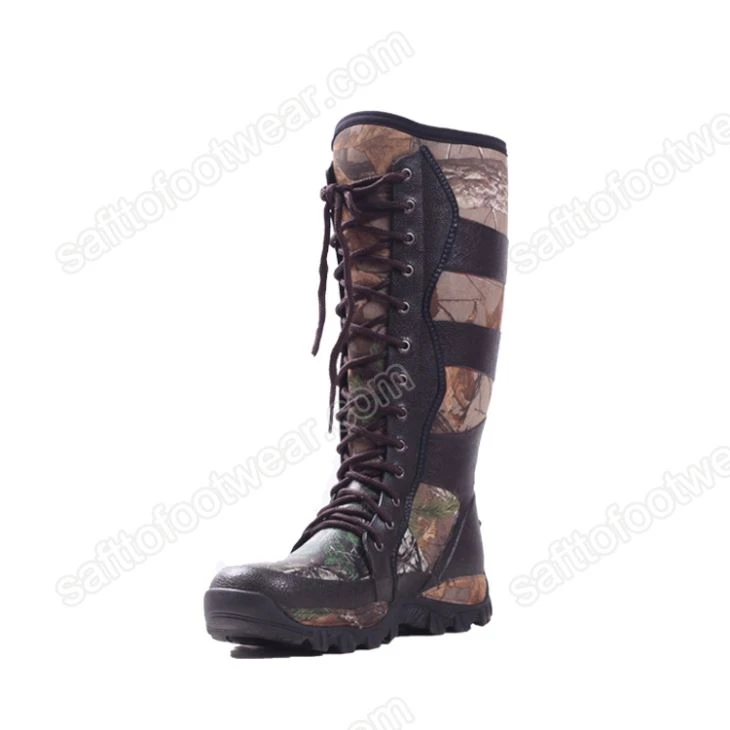
If you are in the market for high - quality hunting boots that offer both performance and insect resistance, we invite you to consider our Neoprene Hunting Boots. We are committed to providing the best products and services to our customers. If you have any questions or are interested in placing an order, please feel free to contact us for further discussion and procurement negotiations.
References
- Smith, J. (2018). The Science of Hunting Gear. Outdoor Magazine, 25(3), 45 - 52.
- Johnson, R. (2019). Insect Behavior and Attraction. Entomology Journal, 32(2), 67 - 74.