

Hey there! As a supplier of Rubber Safety Boots, I often get asked if these boots can be worn in wet environments. Well, let's dive right into it and find out.
First off, rubber is naturally water - resistant. That's one of the main reasons why rubber is a popular material for safety boots, especially when it comes to wet conditions. When you're out in the rain, working around water, or in a wet factory floor, rubber safety boots can keep your feet dry.
The thing is, not all rubber safety boots are created equal. Some are designed specifically for heavy - duty work in extremely wet conditions. For example, our Rubber Safety Boots for Heavy Work are built tough. They have a thick rubber sole and upper that can withstand long hours in water without getting damaged. The rubber used in these boots is of high - quality, which means it won't crack or break easily, even when exposed to water for extended periods.
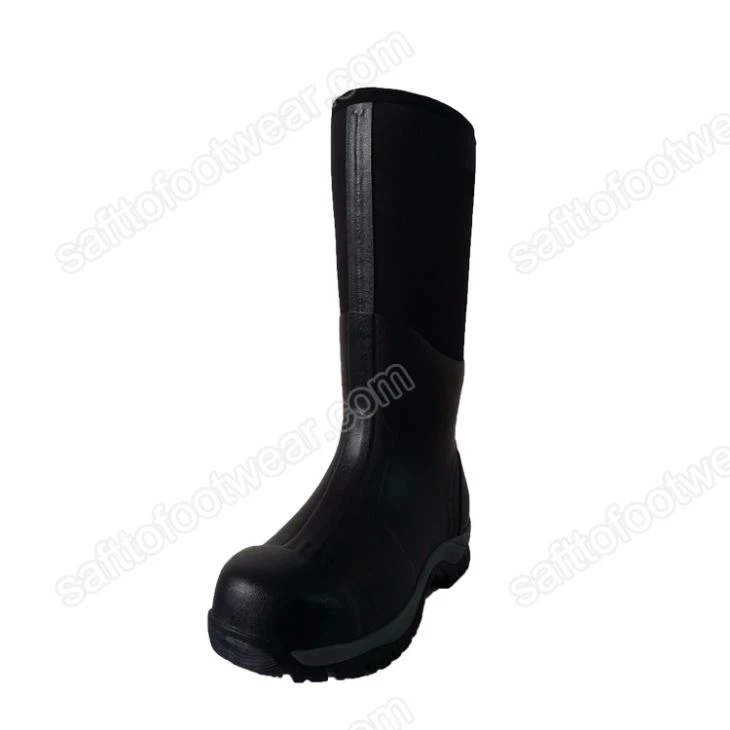

Another great option for wet environments is our Neoprene Waterproof Rubber Safety Footwear. Neoprene is a type of synthetic rubber that is not only waterproof but also flexible. This makes the boots comfortable to wear, even when you're constantly on the move in a wet area. The neoprene material also provides good insulation, which is a plus if the water you're working in is cold. You don't want your feet to turn into ice cubes, right?
Now, you might be thinking about the heat factor. Sometimes, wet environments can also be hot, like in a steam room or near hot water pipes. That's where our Heat Resistant Rubber Safety Boots come in handy. These boots are designed to resist high temperatures while still keeping your feet dry. The rubber used in these boots has special heat - resistant properties, so you don't have to worry about the boots melting or deforming in hot, wet conditions.
But it's not just about the material. The design of the boots also plays a crucial role in their performance in wet environments. Good rubber safety boots should have a tight seal around the ankle. This prevents water from seeping in through the top of the boot. A well - designed sole is also important. It should have good traction to prevent slips and falls on wet surfaces. You don't want to end up taking an unexpected tumble just because your boots can't grip the floor properly.
One thing to keep in mind is maintenance. Even the best rubber safety boots need a little TLC. After using them in a wet environment, it's a good idea to dry them out properly. You can do this by removing the insoles and letting the boots air dry in a well - ventilated area. Avoid using direct heat sources like heaters or hair dryers, as this can damage the rubber. Also, check the boots regularly for any signs of wear and tear, such as cracks or holes. If you find any issues, it's best to replace the boots or get them repaired as soon as possible.
In addition to keeping your feet dry, rubber safety boots also offer other safety features. Many of our boots come with steel toes or composite toes, which protect your feet from heavy objects that might fall on them. They also have puncture - resistant soles, which are great if you're working in an area where there are sharp objects on the ground.
So, to answer the question, yes, rubber safety boots can definitely be worn in wet environments. In fact, they are one of the best choices for keeping your feet dry, safe, and comfortable in such conditions. Whether you're a construction worker, a factory employee, or someone who just needs reliable footwear for wet jobs, our rubber safety boots are up to the task.
If you're interested in purchasing rubber safety boots for your workplace or personal use, we'd love to have a chat with you. We can help you choose the right boots based on your specific needs and budget. Just reach out to us, and we'll be more than happy to assist you in finding the perfect pair of rubber safety boots for those wet days.
References:
- Industry knowledge and experience in rubber safety boot manufacturing and supply.
- Research on rubber materials and their properties in wet and various working conditions.