

Are rubber boots slip-resistant? This is a question that many consumers often ask when considering purchasing rubber boots. As a supplier of high-quality rubber boots, I am here to provide you with a comprehensive analysis of the slip-resistant properties of rubber boots.
The Science Behind Slip Resistance
Slip resistance is determined by the coefficient of friction between the sole of the boot and the walking surface. A higher coefficient of friction means better slip resistance. Rubber is a material known for its relatively high friction coefficient, which gives it an inherent advantage in terms of slip resistance compared to some other materials like smooth plastics or metals.
The molecular structure of rubber allows it to conform to the surface irregularities of the ground. When you walk on a surface, the rubber sole deforms slightly to fit the bumps and grooves, increasing the contact area and thus the friction. This is especially important on uneven or textured surfaces where a good grip is essential.
Factors Affecting Slip Resistance of Rubber Boots
However, not all rubber boots are equally slip-resistant. Several factors can influence the slip resistance of rubber boots:
1. Rubber Compound
The type of rubber used in the boot's sole plays a crucial role. Different rubber compounds have different physical properties. For example, some rubber compounds are formulated to be more flexible, which can enhance the boot's ability to conform to the surface. Others may be designed to be more durable but may sacrifice some flexibility and, consequently, slip resistance. At our company, we carefully select the rubber compounds for our boots to ensure a balance between durability and slip resistance.
2. Tread Design
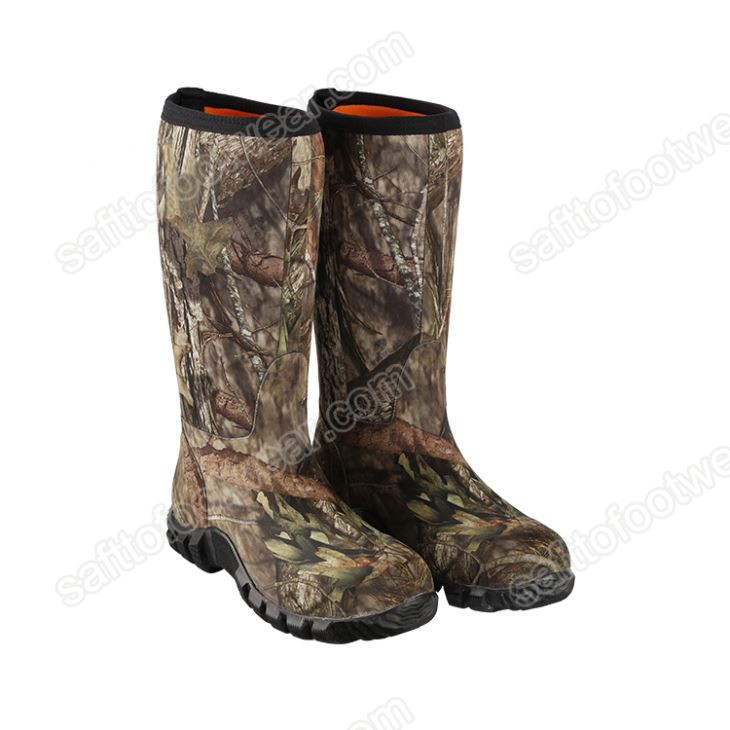
The tread pattern on the sole of the boot is another important factor. A well-designed tread can channel water, mud, or other slippery substances away from the sole, maintaining contact with the ground. Deep, wide grooves are effective at dispersing water on wet surfaces, reducing the risk of hydroplaning. For example, our Jungle Rubber Hunting Boots feature a specialized tread pattern that is optimized for both wet and uneven terrains. The aggressive tread provides excellent traction on muddy trails, rocky surfaces, and wet grass.
3. Surface Conditions
The slip resistance of rubber boots can also be affected by the surface on which they are used. Rubber boots generally perform well on most common surfaces such as concrete, asphalt, and wood. However, on extremely smooth or oily surfaces, the slip resistance may be reduced. For instance, walking on a freshly waxed floor or an oil - soaked garage floor can pose a challenge even for the most slip - resistant rubber boots.
Testing Slip Resistance
To ensure the quality of our rubber boots, we conduct rigorous slip resistance testing. We use industry - standard testing methods that simulate different walking conditions. These tests involve measuring the coefficient of friction between the boot sole and various surfaces under controlled conditions.
One common test method is the pendulum test. In this test, a pendulum with a sample of the boot sole attached to it is swung across a test surface. The energy absorbed during the swing is measured, and from this, the coefficient of friction can be calculated. By conducting these tests, we can accurately assess the slip resistance of our boots and make any necessary adjustments to the rubber compound or tread design.
Slip Resistance in Different Applications
Our rubber boots are designed for a variety of applications, and the slip - resistant requirements may vary depending on the use case.
Hunting
Hunters often find themselves in challenging terrains, including wet forests, muddy swamps, and rocky hillsides. Slip - resistant boots are essential to prevent falls and ensure safety during long hours of walking. Our Womens Knee High Hunting Boots and Mens Hunting Rubber Rain Boots are specifically engineered to provide excellent traction in these environments. The thick rubber soles with deep treads grip the ground firmly, allowing hunters to move quietly and safely through the wilderness.
Industrial Work
In industrial settings, such as factories, warehouses, and construction sites, workers are often exposed to slippery floors due to spills, water, or oil. Slip - resistant rubber boots can significantly reduce the risk of workplace accidents. Our industrial - grade rubber boots are designed with high - performance rubber compounds and tread patterns that are optimized for these harsh environments.
Outdoor Recreation
Whether you are hiking, fishing, or gardening, slip - resistant boots can enhance your outdoor experience. They provide stability and confidence, allowing you to focus on enjoying the activity rather than worrying about slipping. Our rubber boots are popular among outdoor enthusiasts for their reliable slip - resistant properties.
Maintaining Slip Resistance
To ensure that your rubber boots maintain their slip - resistant properties over time, proper maintenance is essential. Here are some tips:
1. Clean the Soles Regularly
Dirt, mud, and other debris can accumulate on the soles of the boots, reducing the friction. Regularly cleaning the soles with a brush and mild soap can help remove these substances and restore the slip resistance.
2. Avoid Excessive Wear
Over time, the tread on the soles of the boots will wear down. Once the tread depth becomes too shallow, the slip resistance will be compromised. It is important to replace your boots when the tread is significantly worn.
3. Store Properly
Storing your boots in a cool, dry place can prevent the rubber from deteriorating. Exposure to extreme heat or sunlight can cause the rubber to harden and lose its flexibility, which can affect the slip resistance.
Conclusion
In conclusion, rubber boots can be highly slip - resistant, but it depends on several factors such as the rubber compound, tread design, and surface conditions. At our company, we are committed to providing our customers with rubber boots that offer excellent slip resistance for a variety of applications. Whether you are a hunter, an industrial worker, or an outdoor enthusiast, our boots are designed to keep you safe and stable on your feet.
If you are interested in purchasing our high - quality rubber boots or have any questions about our products, please feel free to contact us for a procurement discussion. We look forward to serving you and meeting your rubber boot needs.

References
- ASTM International. (2019). Standard Test Method for Measuring the Coefficient of Friction by the Pendulum Test Device. ASTM F1677 - 19.
- ISO 20345:2011. Personal protective equipment - Safety footwear.