

As a supplier of Oil Resistant Rubber Rain Boots, I often receive various inquiries from customers. One question that comes up quite frequently is whether our oil-resistant rubber rain boots are also heat-resistant. In this blog post, I'll delve into this topic, providing a scientific and detailed analysis to help you understand the relationship between oil resistance and heat resistance in rubber rain boots.
Understanding the Basics of Oil-Resistant Rubber
Oil-resistant rubber is specifically formulated to withstand the damaging effects of oils and petroleum-based products. When rubber comes into contact with oil, it can swell, lose its physical properties, and eventually fail. To prevent this, special additives and polymers are incorporated into the rubber compound during the manufacturing process. These additives create a barrier that resists the penetration of oil molecules, maintaining the integrity of the rubber and ensuring its long-term performance in oil-rich environments.
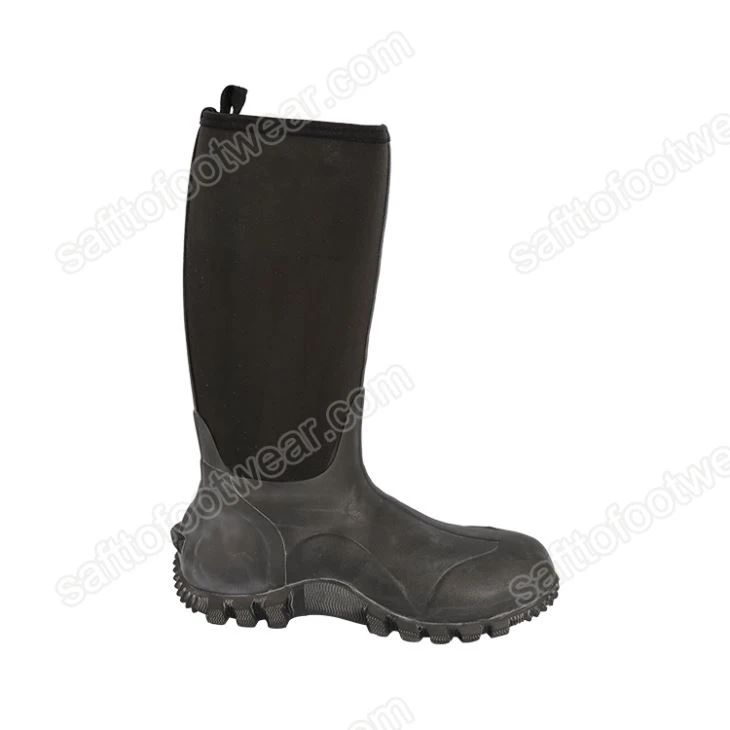

The most common types of oil-resistant rubber used in rain boots are nitrile rubber (NBR) and neoprene (CR). Nitrile rubber is known for its excellent resistance to a wide range of oils, fuels, and solvents. It has good mechanical properties, such as high tensile strength and abrasion resistance, making it suitable for heavy-duty applications. Neoprene, on the other hand, offers moderate oil resistance along with excellent weather resistance, ozone resistance, and flame retardancy. It is often used in applications where exposure to oil is not as severe but where other environmental factors need to be considered.
The Concept of Heat Resistance
Heat resistance refers to the ability of a material to maintain its physical and chemical properties when exposed to high temperatures. When rubber is heated, it can undergo a series of changes, including softening, melting, or decomposition. These changes can significantly affect the performance and durability of the rubber product.
The heat resistance of rubber is determined by several factors, including the type of rubber, the additives used, and the manufacturing process. Some rubbers, such as silicone rubber and fluorocarbon rubber, have inherently high heat resistance and can withstand temperatures up to several hundred degrees Celsius. However, these types of rubber are often more expensive and may not be suitable for all applications.
Are Oil-Resistant Rubber Rain Boots Heat-Resistant?
The short answer is that it depends. Not all oil-resistant rubber rain boots are heat-resistant, and the level of heat resistance can vary depending on the specific rubber compound used.
As mentioned earlier, nitrile rubber and neoprene are commonly used in oil-resistant rain boots. Nitrile rubber has a relatively low heat resistance compared to some other types of rubber. It typically starts to soften and lose its mechanical properties at temperatures above 100°C (212°F). Neoprene, on the other hand, has a slightly higher heat resistance and can withstand temperatures up to around 120°C (248°F).
However, it's important to note that these temperature limits are approximate and can be affected by other factors, such as the duration of exposure, the presence of other chemicals, and the specific formulation of the rubber compound. In some cases, manufacturers may add special heat-resistant additives to the rubber to improve its heat resistance. These additives can help to increase the temperature at which the rubber starts to degrade and can extend its useful life in high-temperature environments.
Applications and Considerations
When choosing oil-resistant rubber rain boots, it's important to consider the specific application and the environmental conditions in which they will be used. If your work involves exposure to both oil and high temperatures, you'll need to look for boots that are specifically designed to be both oil-resistant and heat-resistant.
For example, in industries such as automotive repair, oil refineries, and welding, workers may be exposed to hot oil, grease, and high temperatures. In these cases, it's crucial to choose boots that can provide adequate protection against both oil and heat. Look for boots that are made from high-quality rubber compounds with proven heat resistance and that have been tested and certified to meet relevant safety standards.
On the other hand, if your work mainly involves exposure to oil but not high temperatures, you may not need boots with extreme heat resistance. In these cases, standard oil-resistant rubber rain boots may be sufficient to protect your feet from oil and other contaminants.
Other Types of Rubber Rain Boots
In addition to oil-resistant and heat-resistant rubber rain boots, we also offer a variety of other types of rubber rain boots to meet different needs. For example, our Acid and Alkali Resistant Waterproof Boots are designed to provide protection against acids, alkalis, and other corrosive substances. These boots are made from special rubber compounds that are resistant to chemical attack and can withstand harsh industrial environments.
Our Field Waterproof Rain Boots are ideal for outdoor activities such as farming, gardening, and hiking. These boots are designed to keep your feet dry and comfortable in wet and muddy conditions. They are made from high-quality waterproof rubber and have a durable sole for good traction.
If you work in cold environments, our Farm Insulated Rubber Boots are a great choice. These boots are insulated with warm materials to keep your feet warm in cold weather. They are also oil-resistant and waterproof, making them suitable for a variety of farm and agricultural applications.
Conclusion
In conclusion, not all oil-resistant rubber rain boots are heat-resistant, and the level of heat resistance can vary depending on the specific rubber compound used. When choosing rubber rain boots, it's important to consider the specific application and the environmental conditions in which they will be used. If you need boots that are both oil-resistant and heat-resistant, look for products that are specifically designed for these requirements and that have been tested and certified to meet relevant safety standards.
As a supplier of Oil Resistant Rubber Rain Boots, we are committed to providing high-quality products that meet the needs of our customers. If you have any questions or need further information about our products, please feel free to contact us. We would be happy to discuss your requirements and help you choose the right boots for your application.
References
- "Rubber Technology: Compounding, Mixing, and Vulcanization" by Maurice Morton
- "Handbook of Elastomers" edited by James E. Mark, Burak Erman, and Christopher L. Byers
- Industry standards and specifications for rubber rain boots and safety footwear